Foundation Work We Do
Footing Excavation
Footings dug to the widths, depths, and elevations on your foundation plan — square corners, flat bottoms, undisturbed soil at bearing grade. In CSRA clay that last part matters most: clay that's been churned up and loosely thrown back doesn't bear load like the undisturbed soil beside it. We dig to plan depth and stop, so your footings pour on ground that will actually hold them.
Slab & Building Pad Prep
Cut, fill, and compaction to bring a pad to finish grade within tight tolerance, so the concrete crew isn't burning yardage correcting our dirt. For full lot-to-pad projects — clearing through pad certification — see our site preparation page.
Crawlspace Dig-Outs
Crawlspace and stem-wall excavation for new construction, plus dig-outs that turn an existing shallow crawlspace into usable clearance for mechanicals and access. Tight-access work with compact equipment where a full-size machine can't go.
Basement Excavation
Basements are rarer in the CSRA than up north — our frost line is shallow, so the code minimum footing depth (12 inches below grade and below the frost line) never forces foundations deep here — but on sloped lots in Evans, Martinez, and North Augusta, a walkout basement is often the smartest square footage on the plan. We cut basements with proper over-dig for wall forming and waterproofing crews, stable side slopes, and a plan for every yard of spoil.
Dug to the Engineer's Specs — Not "Close Enough"
Residential foundations here ride on expansive red clay, which is exactly why foundation plans in this area carry specific requirements: bearing depths, compaction standards, sometimes select fill. We work from your stamped plan, hold the elevations with laser or GPS grade control, and coordinate directly with your builder, concrete contractor, and the county inspector so footing inspections happen on schedule — an open hole waiting on a failed inspection is an open hole collecting weather.
Over-dig is the quiet skill in this trade. Dig a footing trench too deep and you can't just rake dirt back in — loose fill under a footing settles, and the footing follows it. The fixes (compacted structural fill or extra concrete) cost real money, so the cheaper path is an operator who hits grade the first time.
Water Management: The Augusta Problem
An open foundation hole in Cecil clay plus one summer thunderstorm equals a swimming pool — the same near-zero infiltration we build drainage systems around means rainwater that enters the excavation stays there. We manage it instead of mopping it:
- Slope and berm. The excavation is graded so surface water runs away from the hole, not into it, with berms or diversion cuts uphill where the lot demands it.
- Sump and pump. On multi-day digs, a sump pit and pump clear what rain does get in, before it soaks and softens bearing soil.
- Sequence around weather. We watch the radar and don't open more hole than we can protect. Softened, rain-soaked clay at footing grade has to be cut out and reworked — the cheapest water management is not letting it happen.
Backfill: Where Foundations Are Won or Lost
Once walls are poured and cured, the dirt goes back — and how it goes back matters as much as the dig. We place backfill in lifts (shallow layers, typically 6–8 inches), compacting each before the next, rather than pushing the whole pile in at once. Loose backfill does two ugly things: it settles, dropping your porches, stoops, and patios over the next few years, and it acts as a sponge that funnels roof and surface water straight down the foundation wall. We finish the top of the backfill with positive slope away from the structure — the same six-inches-in-ten-feet code standard (IRC R401.3) we hold on grading work — so the foundation sheds water from day one.
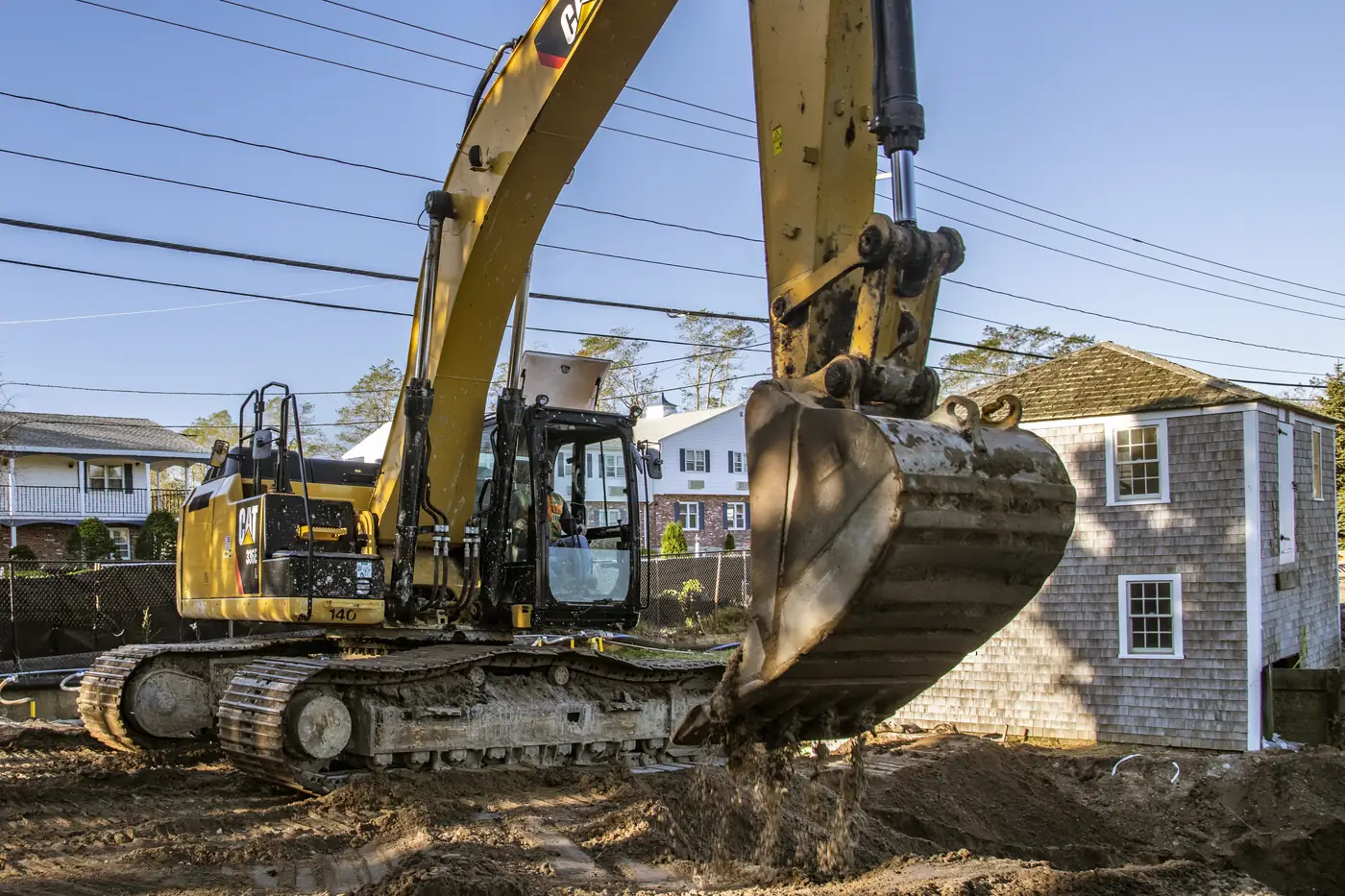 Photo: USDA NRCS (public domain)
What Does Foundation Excavation Cost?
Foundation excavation is quoted per project, and these are the drivers, honestly stated:
- Footing and crawlspace excavation for a typical single-family home commonly falls in the $2,000–$8,000 range depending on footprint, access, and how much cut the lot needs.
- Full basement excavation runs substantially more — often $10,000–$25,000+ — because the yardage is 10–20 times a footing dig and the spoil has to go somewhere.
- What moves the number: depth and total dirt volume, hauling spoil off-site versus spreading on-site, rock or wet soil surprises, access for equipment, and dewatering needs.
We give builders and owners a firm written quote from the foundation plan and a site visit. Machine-and-operator work billed hourly runs $100–$300/hr in this market, but a fixed quote from the plan is how you should buy this work — you shouldn't carry the risk of a slow dig.
Frequently Asked Questions
What does foundation excavation cost in Augusta?
Typical footing and crawlspace digs for a single-family home run roughly $2,000–$8,000, and full basements commonly run $10,000–$25,000+ depending on volume, access, and spoil hauling. Send us the foundation plan and we'll return a firm written number — quoting from the actual plan is more accurate than any range on a website.
How long does foundation excavation take?
Footings and crawlspaces for a typical house take one to three days; basements usually take three days to a week. The schedule risk isn't digging speed — it's weather and inspection timing, which is why we coordinate the dig date with your builder and inspector so the hole is open for as few days as possible.
What happens if it rains while the hole is open?
We plan for it before it happens: the excavation is sloped and bermed so surface water runs away from the hole, and on longer digs we keep a sump pump on site. If footing-grade clay does get soaked and softened, it can't be poured on — it gets cut out and reworked. Good water management is the difference between a one-day weather delay and re-digging half the job.
Do you dig to engineer specifications?
Yes — we work from your stamped foundation plan and hold bearing depths and elevations with laser or GPS grade control. We also protect the spec that isn't written down: not over-digging, because footings must pour on undisturbed soil, and loose dirt raked back into a too-deep trench will settle under load.
Why does backfill compaction matter so much?
Because loose backfill settles and soaks. Settling drops the concrete flatwork above it — stoops, walks, patios — within a few years, and uncompacted fill against the wall channels surface water directly down your foundation, feeding the hydrostatic pressure that cracks walls in our clay. Backfill placed in compacted lifts with positive surface slope prevents both, and it costs a little more once instead of a lot more later.