Trenches We Dig
- Water and sewer lines — new service runs, replacements for failed lines, and extensions to outbuildings, dug to the depth your plumber and the local code require.
- Electrical conduit — power to shops, barns, pools, gates, and detached garages, trenched for your electrician's conduit at the burial depth the NEC application calls for.
- Septic lines and septic tank excavation — tank holes, line trenches, and drain field work coordinated with your licensed septic installer, common on the rural edges of Richmond County and out toward Hephzibah and Appling.
- French drain trenches — graded trenches with consistent fall, the make-or-break detail in clay-country drainage. Full drainage design and installation lives on our drainage solutions page.
- Irrigation systems — main and lateral trenches cut fast and clean ahead of your irrigation contractor.
- Downspout and sump discharge lines — buried pipe that takes roof water away from the foundation instead of dumping it beside the slab.
We dig the trench, bed the pipe zone where specified, and backfill in compacted lifts after your plumber, electrician, or installer has done their part and the inspection has passed. We stay in our lane on the licensed trades — you get the right professional making the connections and a trench that makes their job easy.
How Deep Does a Trench Need to Be?
The honest answer: it depends on what's going in it, and the code governs. As working rules of thumb in our area — the plumbing code minimum for water service piping is 12 inches of cover and below the frost line, with many local installs run deeper; electrical burial depths are set by the National Electrical Code and commonly land between 18 and 24 inches depending on the wiring method (18" for rigid PVC conduit, 24" for direct-burial cable in most residential applications); sewer and septic lines are set by fall (slope) as much as depth. We don't guess: depth is confirmed against the applicable code and your trade contractor's spec for the specific job.
Georgia 811: We Call Before We Dig — Every Time
Every trenching job starts with a Georgia 811 locate request, no exceptions — it's state law (O.C.G.A. Title 25, Chapter 9), it's free, and it's the difference between a clean trench and a cut gas line. We schedule the locate at least 48 hours ahead (excluding weekends and holidays), wait the required window, and hand-expose anything questionable near marked utilities. If a contractor ever offers to trench your property without locates to save a couple of days, that's the cheapest possible preview of how they'll handle everything else.
Tight Access, Roots, and Red Clay
Trenching in the CSRA has three enemies, and we're equipped for each:
- Cecil red clay cuts clean when the moisture is right and comes out like brick or grease at the extremes. Experienced operators and the right bucket beat brute force — and clean spoil handling means your backfill goes back in compactable, not as a mud windrow across the lawn.
- Tree roots. Augusta's mature oaks and pines lace the ground with roots that clay binds tight. We route around save-trees where possible and cut cleanly where we can't, instead of ripping root balls loose and killing the tree two summers later.
- Tight access. Fenced backyards in Summerville, established landscaping in Martinez, gates that fit nothing wider than a wheelbarrow — compact excavators and walk-behind trenchers get through where full-size machines can't, and they leave a repairable seam instead of a demolition zone.
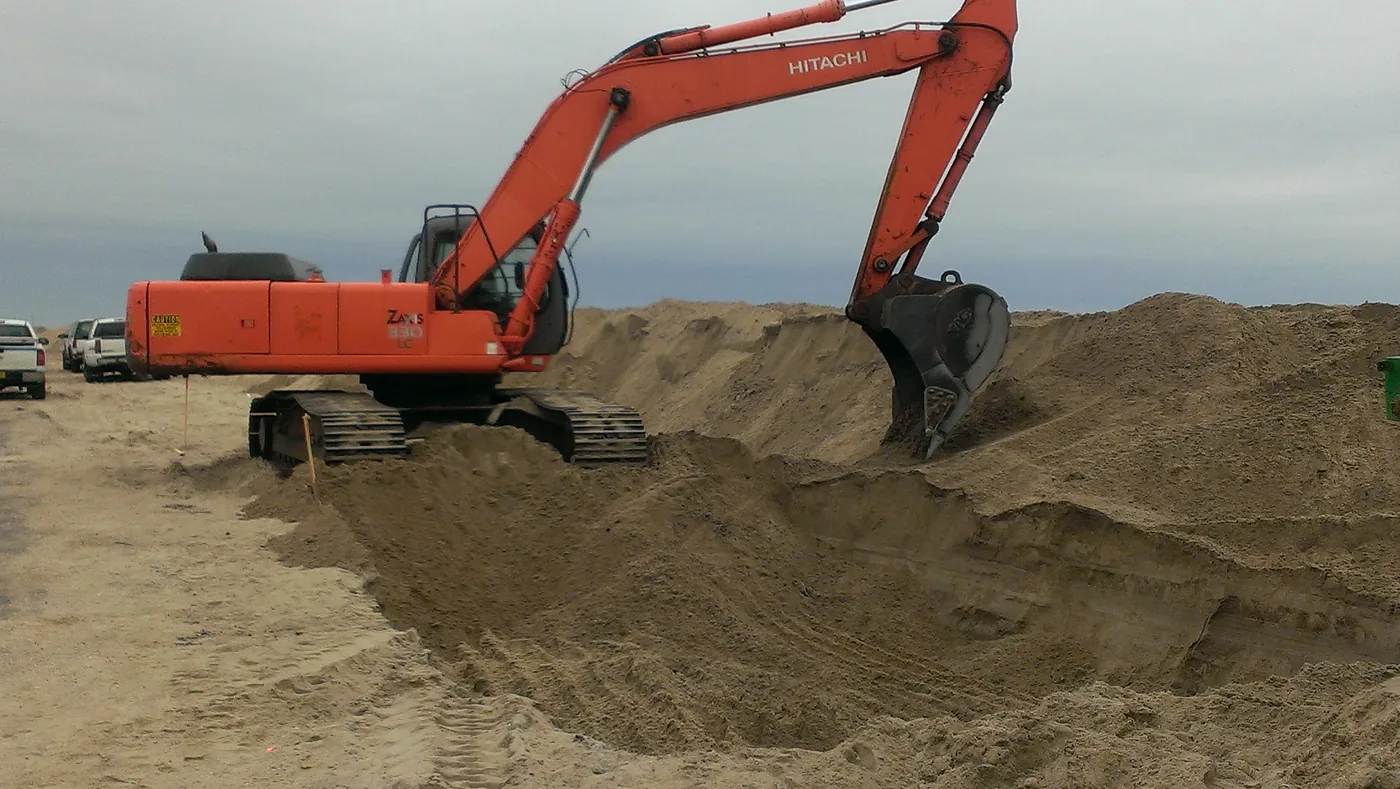 Photo: NCDOT (CC BY 2.0)
What Trenching Costs in Augusta
Trenching is usually priced per linear foot, and industry ranges run from a few dollars per foot for shallow, open-ground runs to $25+ per foot when depth, rock, roots, or tight access slow the dig. What sets your price:
- Length and depth — the two basics; deeper trenches move more dirt and need more care
- Ground conditions — roots, buried debris, old fill, and saturated clay all slow production
- Access — open pasture digs fast; a fenced backyard with one gate doesn't
- Bedding and backfill spec — sand bedding, gravel envelope (for French drains), and compacted lifts vs. simple backfill
- Restoration — whether we're leaving rough backfill on acreage or making a lawn look untouched
Most residential trenches are half-day to one-day jobs, and we quote a firm written price after seeing the run — no per-foot bait numbers.
Frequently Asked Questions
Can you dig a trench for my water or electric line, and how deep does it need to be?
Yes — utility trenches are core work, and depth depends on the line: the plumbing code minimum for water service is 12 inches of cover and below the frost line (local installs often run deeper), and electrical burial depth depends on the wiring method — commonly 18 inches for PVC conduit and 24 inches for direct-burial cable under the NEC. We confirm the exact requirement against code and your plumber's or electrician's spec before digging, so the trench passes inspection the first time.
What does trenching cost?
Most residential trenching prices out per linear foot — from a few dollars per foot for shallow, easy runs up to $25 or more where depth, roots, or tight access slow the work — and most homeowner trench jobs total in the hundreds to low thousands. Call (762) 224-7903 with the run length and what's going in the trench, and we'll give you a firm written quote after a quick look.
Do you call 811, or do I have to?
We do — a Georgia 811 locate request is filed before every job we dig, as state law requires, the wait window is built into the schedule, and we hand-expose near any marked line. You don't need to do anything except not let anyone else dig on the property without the same call.
Can you trench through tree roots and tight backyard access?
Yes — compact excavators and walk-behind trenchers fit through standard gates, and we cut roots cleanly or route around trees you want to keep rather than tearing root systems out of the clay. Expect an honest conversation on the site visit about any tree the trench route puts at risk.
How long does a trench take?
Most residential trenches are dug in half a day to a day, with the full job — dig, your trade contractor's installation, inspection, backfill in compacted lifts — usually spanning two to three days of coordination. We schedule the backfill around the inspection so your trench isn't an open hazard any longer than it has to be.